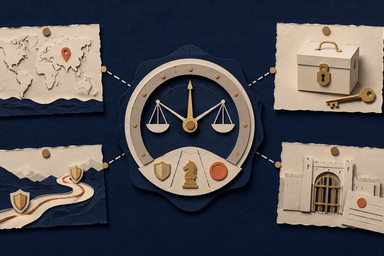
Separate what you must do from what you choose to do.
Some of sovereignty is a legal obligation and the rest is strategy. Teams that never draw the line end up paying for both as though they were one.
01 · Making Sense of Sovereign AI: Questions to Ask Before You Invest
Jurisdiction follows control, not geography.
Sovereignty cannot be assessed at storage alone. Training and inference are often where the real exposure sits, and legal authority travels with whoever holds control.
02 · Sovereign AI, Question 1: Where Is Your Data Located — and Where Is It Processed?
Encryption is necessary and not sufficient.
The question is not whether data is encrypted but who holds the keys — and whether any of your data is critical enough that you cannot afford someone else holding them, even in theory.
03 · Sovereign AI, Question 2: How Is Your Data at Rest Protected — and Who Controls the Keys?
Sovereignty is usually lost through convenience.
Not through the model host, but through logs, telemetry, analytics and “temporary” integrations. A promise that data stays here has to cover every supporting service too.
04 · Sovereign AI, Question 3: How Is Your Data in Transit Handled?
Access expands temporarily, then never shrinks.
The question is not whether you trust the vendor today. It is what happens on acquisition, regulation, dispute or government request — who can be compelled, and by whom.
05 · Sovereign AI, Question 4: Who Can Be Forced to Access Your Data, Models, and Systems?
Start with one real job, not a country label.
“Sovereign” is not a procurement tick. Name the work, then choose the route that carries it — including the honest case for not running it yourself.
07 · From a German local pilot to a European or UK route: four ways to operate a sovereign research assistant